
Mastering 3D Stained Glass Sculptures The Art of Precision and Craftsmanship

Updated: Jan 10
Creating three-dimensional stained glass sculptures requires more than just artistic vision. It demands a high level of precision and craftsmanship that transforms flat pieces of glass into dynamic, living forms. At Glass on Hudson, every sculpture begins with careful design and continues through meticulous cutting, grinding, and soldering to achieve a seamless, balanced work of art.
The Challenge of 3D Stained Glass
Unlike traditional stained glass panels that are flat and two-dimensional, 3D stained glass sculptures introduce complexity in every angle and joint. Each piece of glass must fit perfectly with its neighbors to form a stable structure that captures light from multiple directions.
This complexity means that every cut must be exact. Even a slight misalignment can disrupt the entire form, causing gaps or weak points. The edges need to be ground smoothly to ensure tight joints and structural integrity. This level of precision requires skill, patience, and specialized tools.
Precision Cutting and Grinding
The foundation of any 3D stained glass sculpture is the cutting process. Craftsmen use precision tools to shape each piece of glass according to detailed templates. These templates account for the sculpture’s curves and angles, ensuring that every facet fits together like a puzzle.
After cutting, grinding refines the edges. This step smooths out any roughness and adjusts the shape slightly to improve the fit. Grinding also prepares the glass edges for soldering by creating a clean surface that solder can bond to securely.
Key points in cutting and grinding:
Use accurate templates for each piece
Cut with precision tools designed for glass
Grind edges to smooth and perfect the fit
Check alignment frequently during the process
The Art of Soldering in 3D Sculptures
Soldering in 3D stained glass work is more than just joining pieces. It shapes the sculpture’s final appearance and strength. The solder lines must be smooth and balanced to complement the glass rather than distract from it.
At Glass on Hudson, soldering is done carefully to create subtle, clean joints. This approach enhances the way light interacts with the sculpture, allowing reflections and shadows to play across the surfaces naturally.
Soldering considerations include:
Achieving consistent solder thickness
Avoiding excess solder that can obscure details
Ensuring strong bonds for durability
Creating harmonious lines that follow the sculpture’s form

Balancing Geometry and Light
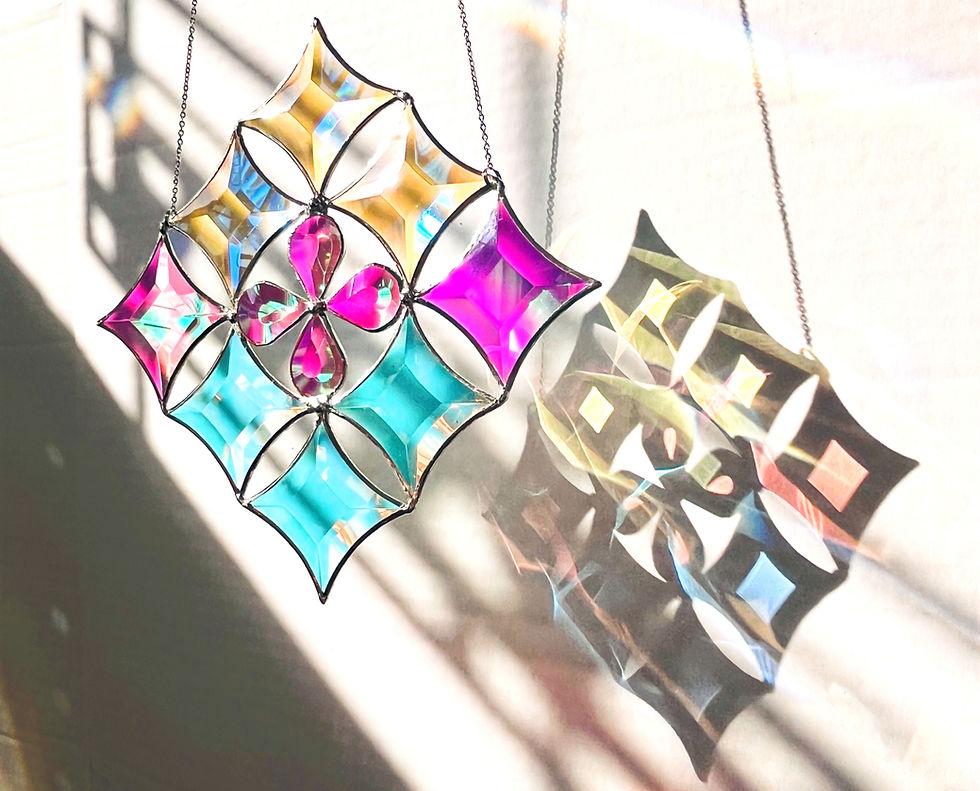
The beauty of 3D stained glass sculptures lies in how they interact with light. The careful balance of geometry and craftsmanship allows light to flow through every curve and facet, creating shifting patterns and colors that change with the viewer’s perspective.
This effect depends on the exact angles and placement of each glass piece. The sculpture’s form must be stable yet open enough to let light pass through. This balance requires a deep understanding of both structural design and the properties of glass.
Hand-Crafting Unique Creations
Every sculpture from Glass on Hudson is hand-crafted with patience and precision. This hands-on approach ensures that each piece is unique, with subtle variations that add character and depth.
Craftsmen take time to inspect every joint and surface, making adjustments as needed to perfect the form. This dedication results in sculptures that reveal new dimensions of beauty from every angle, inviting viewers to explore and appreciate the art in detail.
Practical Tips for Aspiring 3D Stained Glass Artists
For those interested in mastering 3D stained glass sculpture, here are some practical tips:
Start with simple geometric shapes before moving to complex forms
Use high-quality glass and tools for better results
Practice cutting and grinding to develop precision skills
Plan the sculpture carefully, considering light and structure
Take time with soldering to create clean, balanced joints
Study existing sculptures to understand how light interacts with glass
The Importance of Patience and Practice
Creating 3D stained glass sculptures is a demanding but rewarding art form. It combines technical skill with artistic vision to transform glass into living, breathing forms. The precision in cutting, grinding, and soldering is what brings these sculptures to life, allowing light to reveal their full beauty.
Embracing Challenges
Every artist faces challenges. Whether it's a tricky cut or a difficult joint, overcoming these obstacles is part of the journey. Embrace each challenge as an opportunity to learn and improve your craft.
Continuous Learning
The world of stained glass is vast. There are always new techniques and styles to explore. Attend workshops, read books, and connect with other artists. Continuous learning will enhance your skills and inspire your creativity.
Finding Your Unique Style
As you develop your skills, take time to discover your unique style. Experiment with different forms, colors, and techniques. Your personal touch will make your sculptures stand out and resonate with viewers.
Final Thoughts on Crafting 3D Stained Glass Sculptures
Creating 3D stained glass sculptures is a demanding but rewarding art form. It combines technical skill with artistic vision to transform glass into living, breathing forms. The precision in cutting, grinding, and soldering is what brings these sculptures to life, allowing light to reveal their full beauty.
At Glass on Hudson, the commitment to craftsmanship ensures that each sculpture is not just a piece of art but a testament to the dedication and passion behind the craft. Whether you are an aspiring artist or an admirer of this beautiful art form, understanding the intricacies of 3D stained glass will deepen your appreciation for these stunning creations.


Comments