
The Magic of Dichroic Stained Glass

Updated: Apr 6
What Makes Dichroic Stained Glass Unique
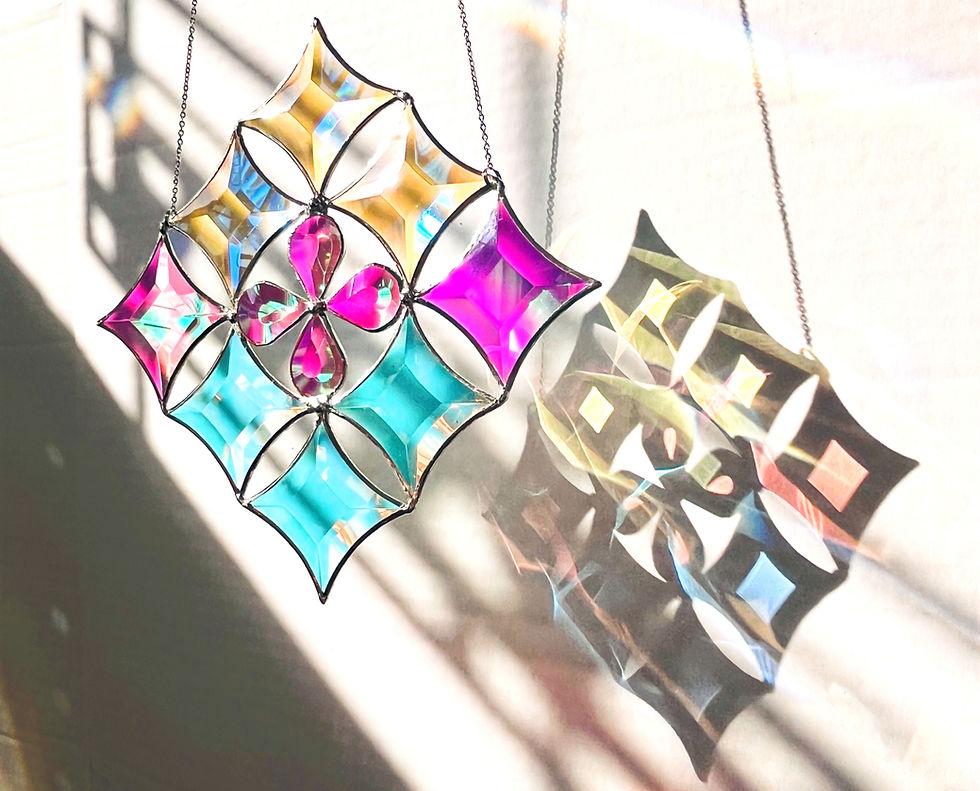
Dichroic stained glass is made by applying ultra-thin layers of metal oxides onto glass at high temperatures. These microscopic layers interact with light, reflecting and transmitting different wavelengths depending on the angle of view. This means the color you see changes as you move around the piece or as the light source changes.
For example, a single piece of dichroic glass might appear deep blue when viewed straight on, but shift to gold or magenta when seen from the side. In bright sunlight, the colors glow vividly, while in softer light, they become more subtle and mysterious. This shifting color is not just decoration; it is the core of the artistic expression.
Artists use this effect to create sculptures and installations where geometry and light continuously play off each other. The glass becomes a living surface, responding to its environment and inviting viewers to engage with it from multiple angles.
How Backing Affects Color in Dichroic Glass
The backing behind dichroic glass changes how its colors behave and how the viewer experiences them. There are two main types of backing: clear and black.
Clear backing allows light to pass through the glass. This creates two layers of color: one that glows outward into the surrounding space and another that reflects on the surface. The result is a sense of depth and transparency. The colors feel atmospheric, almost floating in space, and shift as you move around the piece.
Black backing absorbs the light that would pass through, so only the reflected color remains visible. This makes the colors appear more intense and solid. The effect feels more focused and architectural, emphasizing the surface’s brilliance rather than its transparency.
Choosing between clear and black backing is a key decision for artists. It defines whether the color radiates outward into the environment or stays concentrated on the glass surface.

Practical Tips for Working with Dichroic Stained Glass
If you are an artist or designer interested in using dichroic stained glass, consider these points:
Lighting matters: The best effects happen with natural or well-placed artificial light. Experiment with different light sources and angles to see how the colors shift.
Think about placement: Because the color changes with perspective, place your piece where viewers can move around it or where light changes throughout the day.
Choose backing carefully: Decide if you want the color to feel like it glows through the glass or if you prefer a bold, reflective surface.
Combine with geometry: Use shapes and angles that enhance the shifting color effect. Faceted or layered designs work well.
The Artistic Journey with Dichroic Glass
Dichroic stained glass invites exploration and discovery. Each viewing reveals something new, making it a powerful medium for artists who want to capture the essence of light and color in motion.
Embracing the Dynamic Nature of Color
The beauty of dichroic stained glass lies in its dynamic nature. Artists can create pieces that evolve with their surroundings. This adaptability allows for a unique experience for each viewer. As they move, the glass responds, creating a dialogue between the art and the observer.
Creating Impactful Installations
When designing installations, consider the environment. The interplay of light and color can transform a space. Artists often use dichroic glass in public art, galleries, and homes. The goal is to engage viewers and encourage them to interact with the piece.
The Future of Dichroic Glass Art
As technology advances, so does the potential for dichroic glass. New techniques and materials are emerging. Artists are experimenting with larger installations and more complex designs. This evolution keeps the medium fresh and exciting.
Dichroic stained glass is more than just a visual experience; it is an invitation to explore the relationship between light and color. With each piece, artists can create a unique narrative that resonates with viewers, making it a truly captivating form of art.
In conclusion, the world of dichroic stained glass is vast and full of possibilities. Whether you are an artist or simply an admirer, the shifting colors and dynamic interactions offer a rich experience that is both beautiful and thought-provoking.
Explore the magic of dichroic stained glass and discover how it can transform your perception of art and light.

Comments